Harvest
Yoeri Guépin
Solo exhibition
9 October – 12 December 2027
Vleeshal
Curator: Laurens Otto
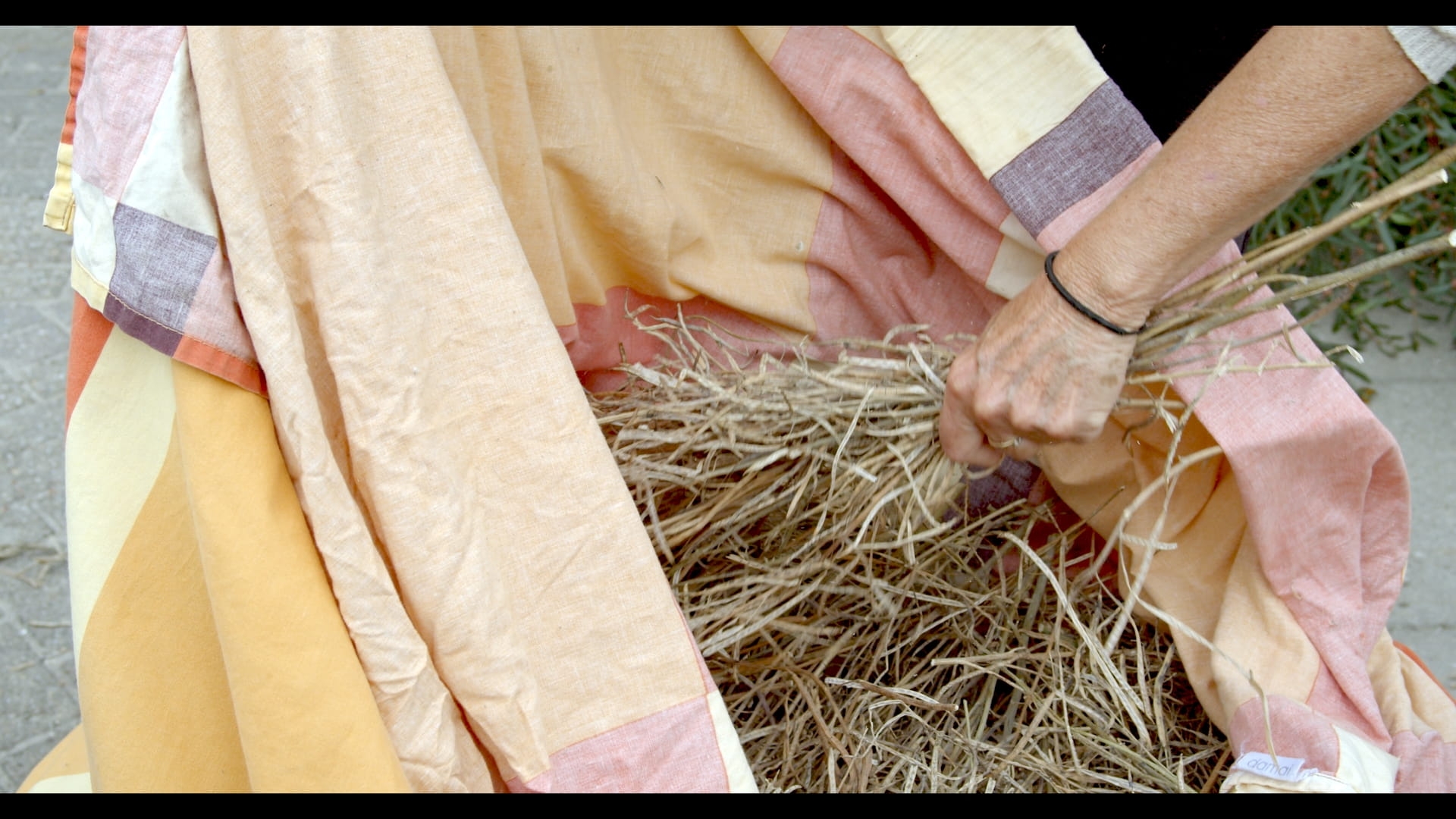
In autumn 2027, Vleeshal will present a solo exhibition by Yoeri Guépin. In the exhibition, the artist explores the political, economic, and social structures that determine which forms of knowledge, labor and care are considered valuable and allowed to endure.
Central to the exhibition is a new film work about the biodynamic farm Loverendale Ter Linde in the Dutch province of Zeeland, where Guépin grew up and where his parents and grandparents worked the fields for forty years. The farm was founded in 1926 by Maria Tak van Poortvliet, a collector of modern art and the life partner of artist Jacoba van Heemskerck. What began as the cultivation of pigment plants for Van Heemskerck’s paintings evolved into a pioneering project that intertwined art, ecology, and social transformation. As the Netherlands’ oldest biodynamic farm, Loverendale Ter Linde embodies a century-old approach to agriculture centred on the care of soil, animals and people.
In the film, Guépin weaves personal memories with the stories of farmers and others involved. Drawing on these different perspectives, he explores what forms of knowledge, labor, and care are needed to sustain agriculture and community. Harvest opens up a space beyond polarized debates about agriculture and nature, inviting a reconsideration of the relationship with the land and those who work it. In an exploration of a utopian initiative born from the connection between agriculture and art, Guépin reconsiders what is possible when ecology is linked to artistic strategies.
This project takes place alongside Guépin’s Professional Doctorate research trajectory at the HZ University of Applied Sciences, and builds on his recent work Tuin van Nesse at Nesse Terneuzen.
Yoeri Guépin
Yoeri Guepin’s artistic practice spans film, installation, garden projects, and participatory forms of research. Drawing on an interest in social ecology, agricultural history, and collective forms of care, he explores how relationships between people, landscape, and community are formed, maintained, and passed on.
In recent years, he has developed living archives in the form of community gardens, where lost crop varieties, intergenerational knowledge, and histories of migration converge. In his most recent project, Tuin van Nesse, he worked with the local community to transform the courtyard garden of Nesse—located within the former Philips factory in Terneuzen—into a community garden.
His work connects personal histories with broader questions about labor, care, and biodiversity, and examines the political and economic structures that determine which forms of knowledge and ways of life can endure. His work has been presented internationally, including at Konsthall C in Stockholm, Kadist in San Francisco, the Sharjah Biennial, and the Jan van Eyck Academy in Maastricht.
Events
9 October – 12 December 2027
Yoeri Guépin: Harvest
Persons
This project is made possible by the generous support of the Dutch Ministry of Education, Culture and Science and the municipality of Middelburg.